

The Avtron M6C series is a well-known encoder family in the market, particularly in drilling applications, where it is widely used as a winch encoder. Over the years, several M6C model codes have appeared, and the differences between them are not always immediately clear. This article explains how the series evolved and how the main model variations relate to one another.
The M6C was developed from the earlier M6 series and can be regarded as its updated generation. From the original M6 to the later M6C versions, three main model designations appeared. The differences between them are primarily related to the model code, bore size, and supply voltage.
M6 Series
The earlier M6 series was available in a wider range of mechanical and electrical configurations.
Available bore sizes included:
- Bore sizes: 1 inch, 1 1/8 inch, 2 inches, 2 2/8 inches
Available supply voltage ranges included:
- Supply voltage: 5–24 VDC, 5–18 VDC, 12–24 VDC
M6C Series
With the introduction of the M6C series, the available configurations became more standardized.
The bore sizes were reduced to two main options:
- Bore sizes: 1 inch, 1 1/8 inch
The supply voltage was also standardized to:
- 5–24 VDC
The Second M6C Model Code
A later version of the M6C introduced another change. This time, however, the product specifications did not change. The difference was in the model designation itself.
The supply-voltage code changed from “1” to “8”, while the other parameters remained unchanged.
The evolution can be illustrated with the following three model numbers:
- Model evolution: M6-4S1HX51ZTZ00 → M6C-4S1HX51ZTZ00 → M6C-4S8HX51ZTZ00
These three model codes represent products with the same main configuration, but they were used during different stages of the product's evolution.
Looking at the models this way makes the development of the M6C series much easier to understand. It also explains why certain M6 and M6C versions can be used as replacements for one another when their actual mechanical and electrical specifications match.
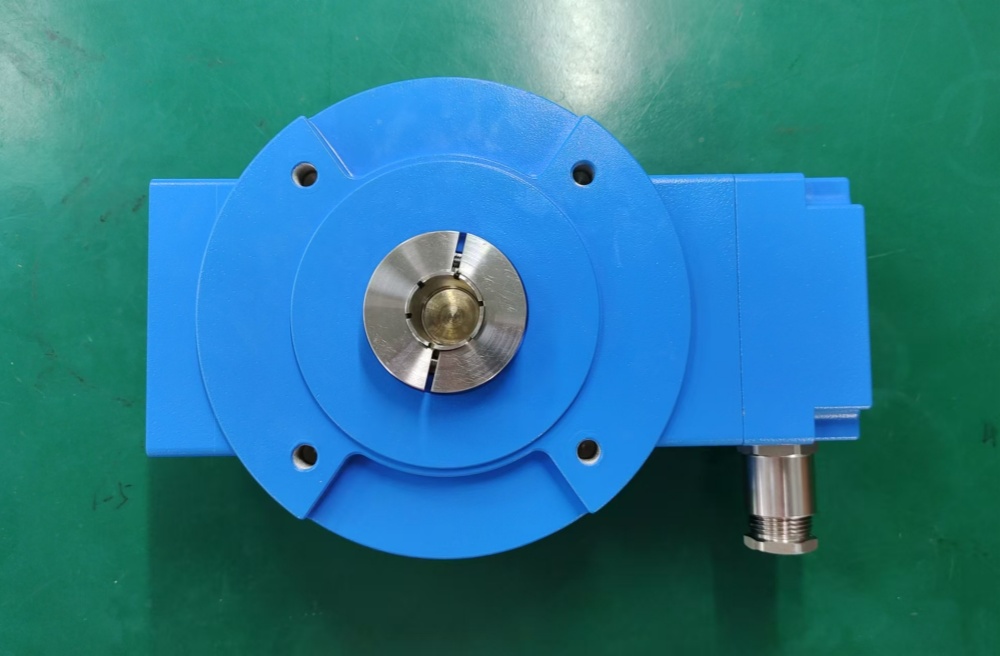
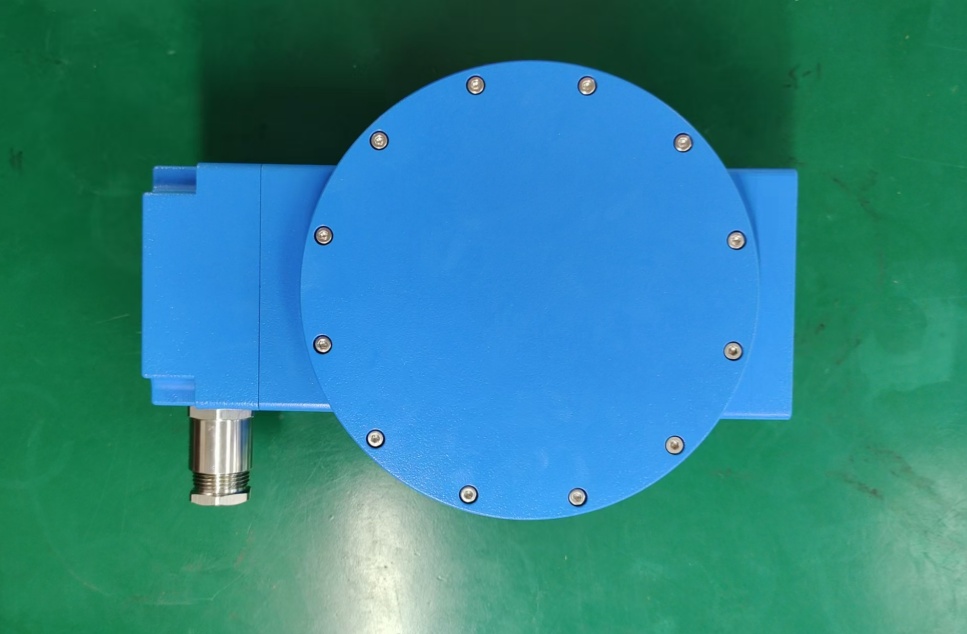
The Chinese M6 Replacement Version
In practice, the M6C winch encoder can still be difficult to source in some markets. This is particularly true in markets where procurement is affected by regional restrictions or other supply-related factors.
For this reason, custom replacement versions of the M6C have also been developed. One such product uses the model designation M6 and is manufactured in China.
Before comparing the models, it is worth explaining the background of this Chinese M6 version.
The Chinese M6 was developed during the COVID-19 pandemic. At that time, a number of oil-industry projects in China were unable to move forward because M6C encoders were in short supply. An oil company therefore commissioned SIVIDI to develop a custom replacement product, which was given the model designation M6.
The next table compares the three original model designations discussed above with the Chinese M6 version.
| Original | Avtron M6 | M6-4S1HX51ZTZ00 | Earlier model |
| Updated | Avtron M6C | M6C-4S1HX51ZTZ00 | Successor designation |
| Later code | Avtron M6C | M6C-4S8HX51ZTZ00 | Same main configuration, revised supply-voltage code |
| Custom version | SIVIDI M6 | M6-01XX6F-1024 | Custom replacement developed in China |
The Chinese M6 was developed as a 1:1 custom replacement based on the application parameters of the M6C and can be used as a direct replacement.
Likewise, the M6-5, M6C-5, and M6-02 follow the same pattern.
Now, returning to practical application and procurement, only the current-generation M6C and the Chinese M6 are readily available at present. In some regions, the Chinese M6 may be the only practical option, with Russia being one example.
Across markets such as the Middle East, Russia, Central Asia, and China, sourcing the current-generation M6C can still be relatively difficult. I do not have enough information to comment on availability in other regions. Based on the current situation, the Chinese M6 generally offers the shortest lead time.
In the end, the most suitable choice will depend on availability and procurement conditions in your own region.