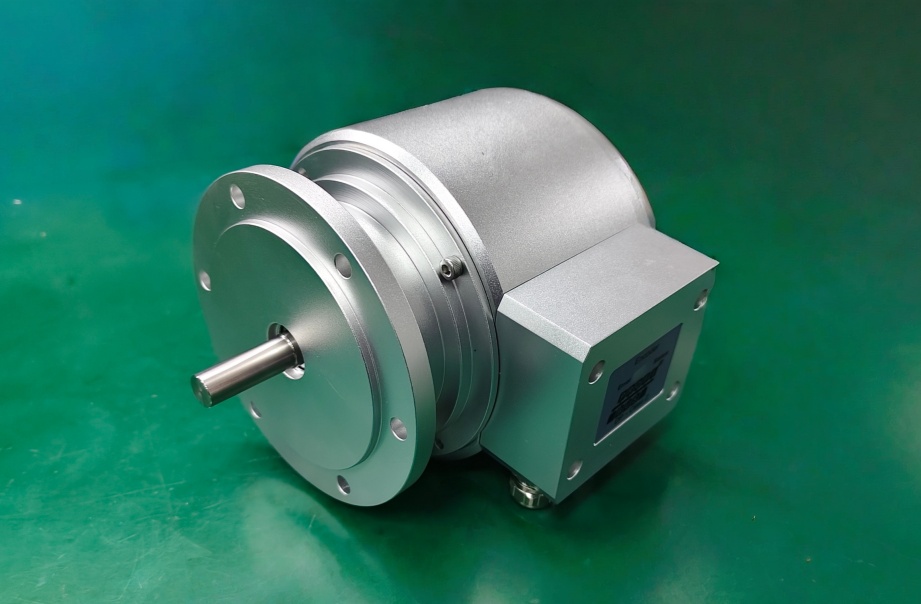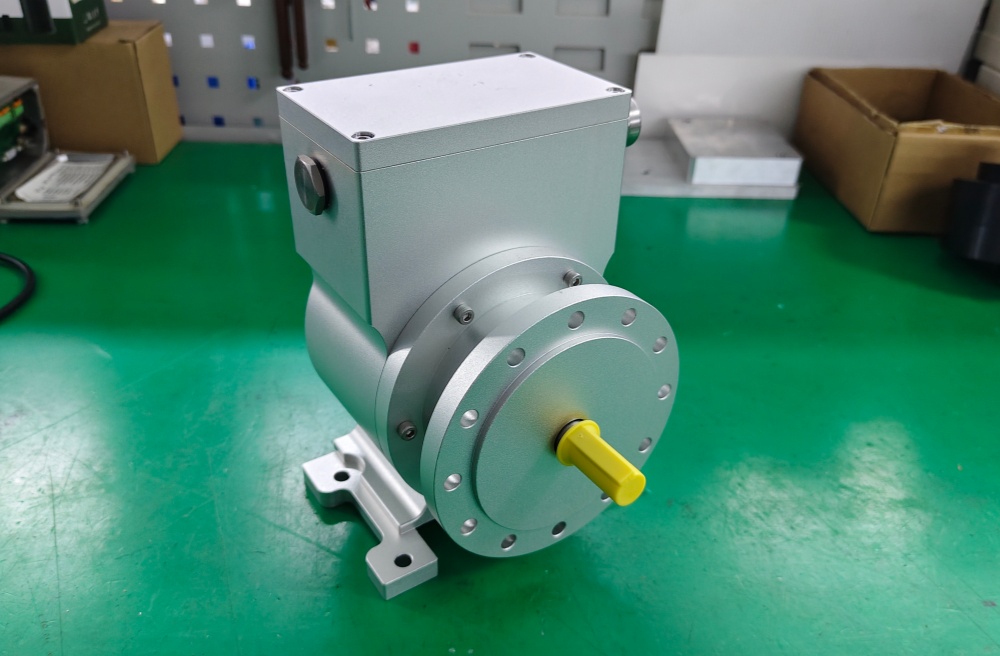

173-00001 is an important heavy-duty absolute encoder model. In earlier documentation and field applications, it is often identified as ZE115M 173-00001, while later references more commonly use 173-00001 as the main identification number.
This article records a custom development project I was involved in for a steel company that needed a replacement for the original 173-00001. I was fortunate to participate throughout the process, from solution definition to production and final delivery.
One point needs to be emphasized first: 173-00001 is not a single-interface encoder. The original model includes both Profibus-DP and SSI interfaces, and this is very important when defining a custom replacement. The original documentation also identifies the interface as PROFIBUS-DP + SSI.
In an actual custom project, however, it is not always necessary to reproduce both communication interfaces. The final configuration can be selected according to the signal actually used by the customer’s machine.
For example, the customer in this project was using Profibus-DP, so the encoder we delivered was configured with Profibus-DP communication. If another machine actually uses SSI, the custom version can instead be defined around the SSI interface.
Mechanical Design
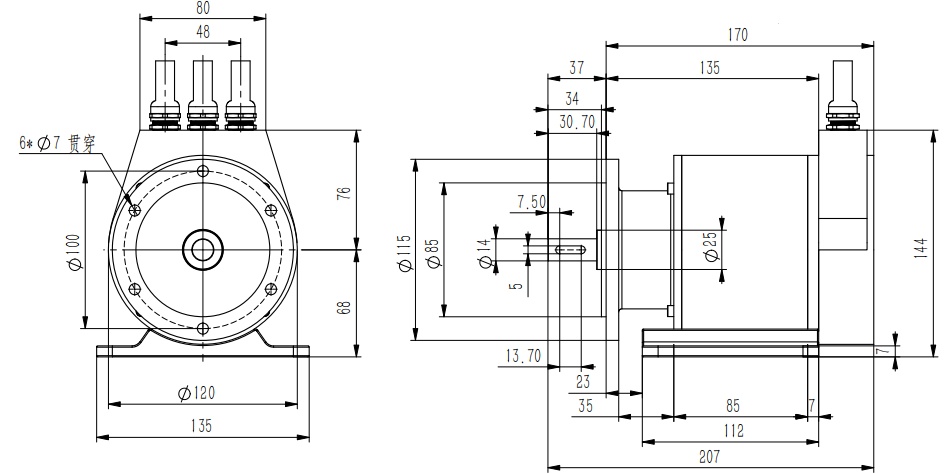
The original 173-00001 uses a 14 mm solid shaft with keyway and a ZB85 flange. According to the original mechanical drawing, the front flange diameter is approximately ø115 mm, making it a typical heavy-duty encoder in the 115 mm class.
For this custom development, the external structure and main mounting dimensions were designed around the original 173-00001 installation requirements in order to minimize mechanical modification on the machine.
Other detailed dimensions can be referenced from the drawing of the custom version.
Electrical Parameters
The original encoder has a single-turn resolution of 4096 steps/rev, a multi-turn range of 4096 revolutions, and a supply voltage of 11–27 VDC.
The custom version retains:
Single-turn: 4096 steps · Multi-turn: 4096 revolutions
The supply voltage was changed to:
10–30 VDC
These are the main application parameters used in this custom design.
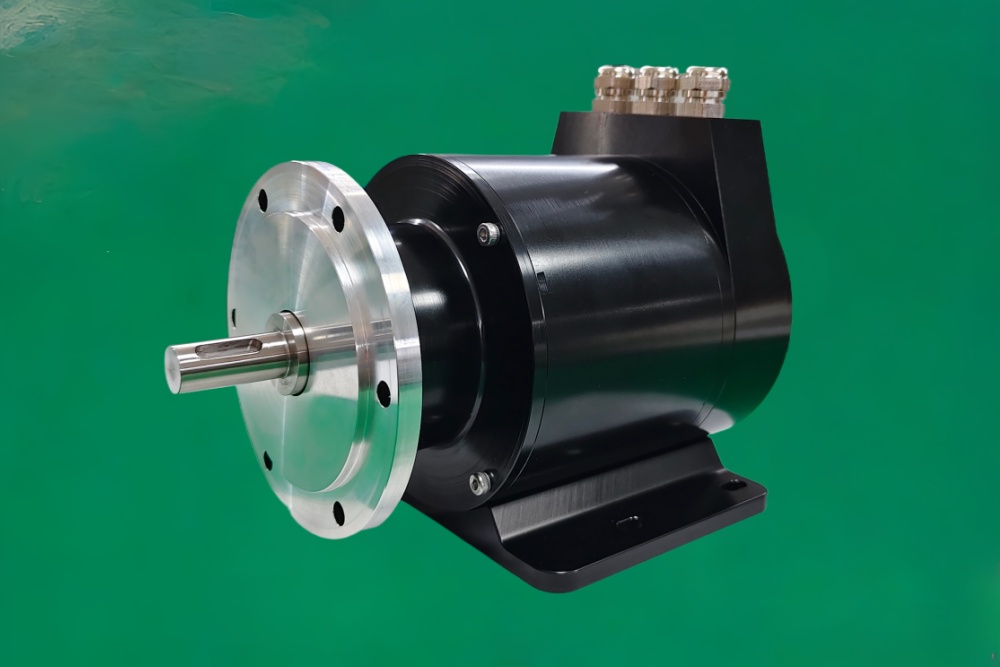
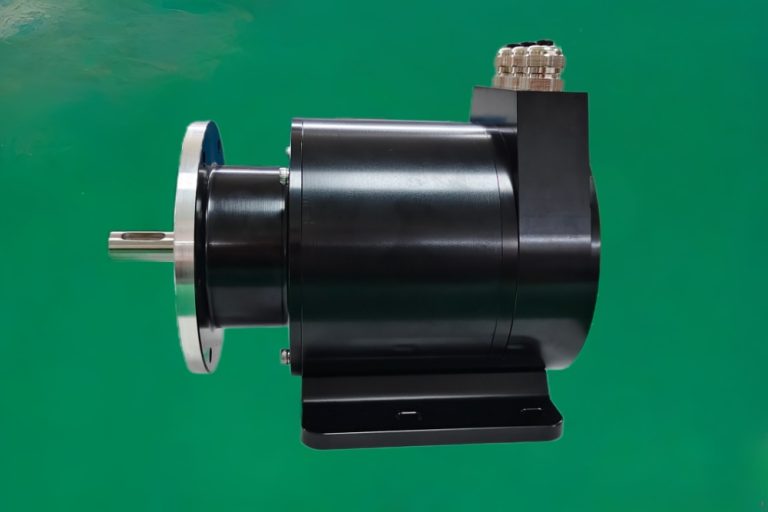
The following photo shows the completed custom encoder.
Main Differences from the Original 173-00001
1. Appearance
The original encoder has a mainly gray metallic appearance, while the custom version uses a black surface finish.
This is primarily a visual difference and does not affect the key application parameters.
2. Profibus-DP GSD Configuration
If the machine uses Profibus-DP, the custom encoder requires its own GSD file for device configuration after installation.
Although the custom encoder uses the same Profibus-DP communication method, it is not the original device itself. For this reason, the original GSD configuration should not simply be treated as fully interchangeable.
For an electrical engineer familiar with Profibus, importing a new GSD file and reconfiguring the device is normally not a difficult task. However, this point should still be confirmed before procurement.
If the machine is actually using the SSI interface, then there is no Profibus GSD reconfiguration issue.
Over the past two years, most of the customers I have encountered have selected the Profibus-DP version, while SSI versions have been relatively uncommon.
My own view is that this is probably related to the control systems already installed on these machines. Many systems using 173-00001 have been in operation for years, and their PLC programs and Profibus-DP network structures are already fixed. In this situation, keeping the original communication method is usually more practical than modifying the control system.
On newer equipment, however, industrial Ethernet interfaces such as PROFINET have become increasingly common, so the application environment of these legacy encoders is quite different from that of many newer systems.
That is all I want to record for this 173-00001 custom development project.
If you are dealing with the same model or a similar heavy-duty encoder replacement, feel free to write to me. For this type of legacy equipment, I believe the most important point is not simply the model number itself, but the actual mechanical dimensions, communication interface, resolution, supply voltage, and PLC configuration used on the machine.
Once these points are confirmed, a custom replacement is usually much easier to define.